Fast progression is no longer dictated by player skill alone. In modern gaming, computer software optimization plays a decisive role in how efficiently players move through levels, ranks, and achievements. From performance tuning to intelligent automation, software has become a critical layer that enhances both gameplay quality and progression speed.
As games grow more complex and competitive, players who understand how to leverage these tools gain a measurable advantage, not by replacing skill, but by amplifying efficiency and consistency.
Performance Optimization
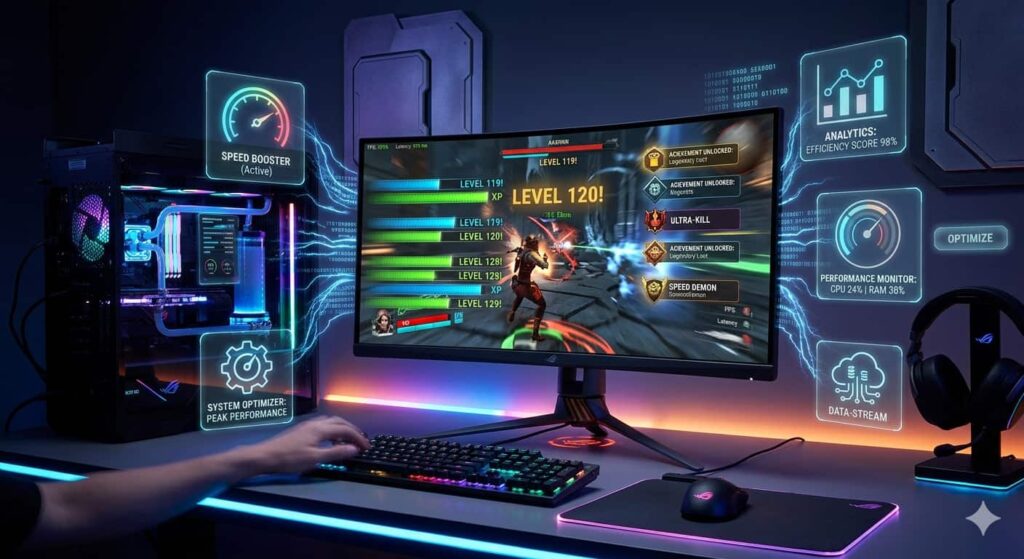
At the core of faster progression lies system performance optimization. Software tools designed to manage CPU, GPU, as well as memory usage ensure that games run at stable frame rates with minimal to no lag. This stability directly impacts reaction time, accuracy, and overall responsiveness. In addition to that, game optimization software can perform the following:
- Reduce background process interference
- Allocate system resources dynamically
- Optimize graphics settings for consistent performance
- Minimize input delay and latency
When gameplay is smooth and uninterrupted, players can execute actions more precisely and avoid costly mistakes. Over time, this leads to faster completion of objectives, improved rankings, and more efficient progression.
Streamlining Repetitive Tasks
Many games include repetitive actions, grinding resources, completing routine quests, or performing repeated inputs. Automation and macro software address this by streamlining these processes.
Macros allow players to execute predefined sequences of actions with a single input, reducing manual effort and increasing consistency. While their use depends on game policies, when applied appropriately, they can do many things such as accelerate repetitive gameplay loops, maintain consistent timing and execution, reduce physical strain during extended sessions and more.
By minimizing time spent on routine tasks, players can focus more on strategic gameplay, effectively compressing progression timelines.
Data-Driven Decisions with Analytics Tools
Another major contributor to faster progression is the use of companion apps and analytics software. These tools provide insights into performance metrics, helping players refine strategies based on data rather than intuition. Analytics platforms can track essential data that any player needs including but not limited to:
- Win/loss ratios and performance trends
- Resource efficiency and usage patterns
- Skill progression over time
- Optimal strategies for specific scenarios
With access to this information, players can identify weaknesses, adjust tactics, and make informed decisions. This reduces trial-and-error gameplay, allowing for more targeted and efficient improvement.
Cloud Systems and Resource Management
Modern gaming environments increasingly rely on cloud-based systems and advanced resource management software. These technologies ensure that hardware capabilities are fully utilized without bottlenecks. With the integration of the cloud, it supports faster data synchronization across devices, reduced local processing strain and seamless updates and performance scaling
Meanwhile, system management tools monitor and optimize background processes, ensuring that gaming applications receive priority access to resources leading to:
- Faster load times
- Stable performance during intensive sessions
- Reduced risk of crashes or interruptions
Together, these systems create a reliable and high-performance environment that supports sustained progression.
Efficiency as a Competitive Advantage
In competitive gaming, small improvements in efficiency can lead to significant gains over time. Software optimization enables players to:
- Complete tasks more quickly
- Maintain consistent performance across sessions
- Reduce downtime caused by technical issues
For casual players, this means enjoying smoother gameplay while unlocking content faster. For competitive players, it translates into better rankings and more consistent results.
The key distinction is that software does not replace skill, it enhances the conditions under which skill is applied. This creates a balanced approach were technical optimization and player ability work together.
The New Standard for Progression
Fast game progression in today’s gaming environment is the result of more than just effort and experience. It is increasingly shaped by how effectively players utilize software tools and system optimization strategies.
From performance tuning and automation to analytics and cloud integration, each layer contributes to a more efficient and streamlined gaming experience. Players who embrace these tools gain the ability to progress faster while maintaining high-quality gameplay.
As gaming continues to evolve, software optimization will remain a defining factor, proving that success is no longer just about how you play, but also about how well your system supports your play.