 Computer software plays an important role in modern entertainment, communication, education, and gaming. It allows users to perform digital tasks, access online services, and connect with people worldwide. As technology continues to develop, gaming software has become more advanced, offering interactive experiences that extend beyond traditional single-player games.
Minecraft Bedrock Edition is an excellent example of how computer software supports accessible multiplayer gaming. It allows players to explore virtual environments, create structures, complete challenges, and interact with online communities using compatible devices.
A Bedrock edition server list helps players discover multiplayer communities that match their interests. Whether someone enjoys survival adventures, creative building, competitive challenges, or casual exploration, these online resources provide opportunities to experience Minecraft in different ways.
Understanding Computer Software in Multiplayer Gaming
Computer software consists of programs and instructions that enable electronic devices to perform specific functions. Operating systems, web browsers, productivity applications, and video games are common examples. Each serves a different purpose while helping users interact with digital technology.
Gaming software combines several technologies to create interactive environments. Graphics processing, network communication, sound management, and player controlswork together to deliver an engaging experience. Multiplayer games also rely on software that allows several users to participate in shared virtual spaces.
Minecraft demonstrates how these technologies can support creativity and social interaction. Players can gather resources, construct buildings, explore landscapes, and participate in activities that encourage problem-solving. The software manages the virtual environment while responding to individual player actions.
Multiplayer servers extend these capabilities by hosting shared gaming worlds. Server software processes player activities, manages connections, and maintains game information. When someone joins a server, their device communicates with the hosting system to receive updates about the surrounding environment and other players.
The relationship between gaming applications and server software helps create a connected experience. Players can collaborate on construction projects, exchange resources, or participate in community events without being in the same physical location.
Software developers also improve multiplayer experiences through updates, performance improvements, and security features. These developments help address technical problems while introducing additional opportunities for entertainment.
Exploring Minecraft Bedrock Edition Server Lists
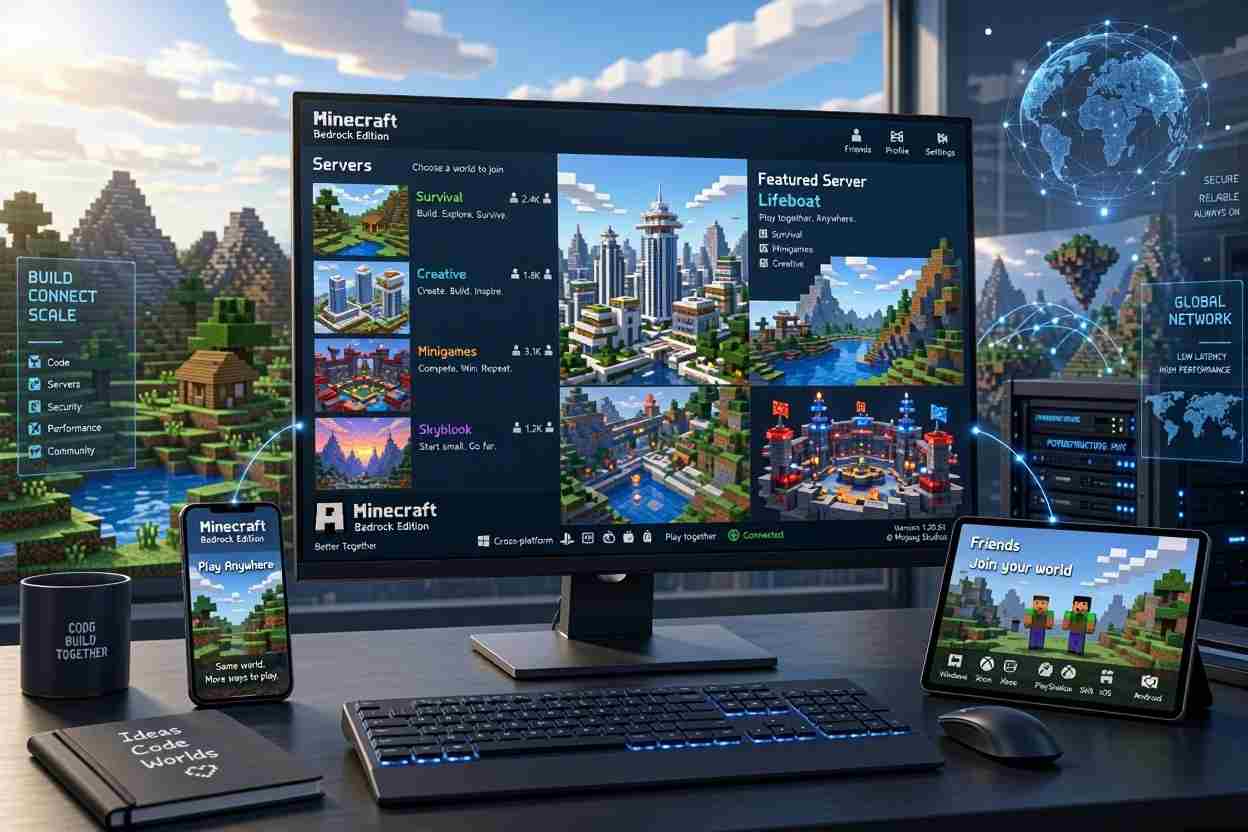
One of the main advantages of Minecraft Bedrock Edition is its cross-platform compatibility. Players using Windows computers, smartphones, tablets, and supported gaming consoles can participate in multiplayer activities together. This flexibility makes gaming more accessible to individuals with different devices and technical capabilities.
A Bedrock edition server list provides a convenient way to discover virtual communities. Instead of searching for individual servers manually, players can browse available options according to their gaming preferences. Server directories often include descriptions, connection addresses, supported game modes, and community information.
Survival servers are suitable for players who enjoy gathering resources, developing settlements, and overcoming environmental challenges. These environments encourage participants to manage resources carefully while working independently or with other community members.
Creative servers offer a different experience by focusing on construction and imagination. Players can design buildings, develop virtual cities, and experiment with architectural concepts. These communities also provide opportunities for individuals to share their ideas and learn building techniques from experienced players.
Competitive servers introduce challenges that test reaction time, strategic thinking, and teamwork. Participants can compete in organized matches, complete obstacle courses, and explore different minigames. Other servers focus on role-playing, where players develop characters and participate in community-created stories.
Joining a server is relatively straightforward. Computer and mobile users can enter custom server addresses through the multiplayer interface. Console players generally access featured servers through the game’s built-in server menu. Players should also check whether their game version is compatible with their chosen server.
Server directories help simplify the discovery process by organizing information in accessible formats. Players can compare communities based on their features, rules, and activities before deciding where to play. This approach makes it easier to find environments that provide enjoyable and meaningful gaming experiences.
Community management is another important consideration. Well-managed servers establish clear guidelines, encourage respectful communication, and provide reporting options. These practices contribute to a more welcoming environment for both new and experienced players.
How Computer Software Shapes the Future of Minecraft Multiplayer
The continued development of computer software creates new opportunities for multiplayer gaming. Improvements in networking, server management, and computer performance allow developers to create more detailed and interactive virtual environments.
Cloud computing has also influenced how gaming communities operate. Server administrators can use hosted computing services instead of maintaining physical equipment themselves. These services can provide additional flexibility when managing growing communities, storing gaming data, and maintaining server availability.
Automation software supports server administration by reducing repetitive tasks. Administrators can schedule backups, monitor performance, and manage certain community activities through automated systems. These tools allow server owners to spend more time developing engaging experiences for their players.
Cybersecurity remains an essential part of multiplayer gaming. Server administrators must protect account information, maintain secure connections, and prevent unauthorized access. Regular software updates and appropriate security settings help reduce potential risks.
Players also have a responsibility to protect their personal information. Using strong passwords, avoiding suspicious downloads, and selecting reputable gaming communities can help create a safer online experience.
Beyond entertainment, Minecraft multiplayer environments offer opportunities for learning. Players can develop communication, leadership, resource management, and problem-solving skills through collaborative activities. Building a virtual settlement, for example, may require participants to organize responsibilities, plan construction, and manage shared resources.
Minecraft can also introduce players to basic computer science concepts. Individuals interested in hosting their own servers can learn about software installation, network connections, system configuration, and digital storage. These practical experiences may encourage further exploration of technology and software development.
As computer software becomes more advanced, multiplayer communities may benefit from improved moderation tools, more efficient networking systems, and greater customization options. Developers and server administrators can use these technologies to create gaming environments that accommodate different interests and skill levels.
Accessibility will remain an important consideration as multiplayer technology evolves. Making software easier to navigate and compatible with different devices allows more people to participate in digital communities.
Ultimately, the relationship between computer software and Minecraft Bedrock Edition demonstrates how technology can bring people together through shared experiences. By exploring a reliable server directory, players can discover new communities, develop creative skills, and experience the possibilities of multiplayer gaming. As software continues to improve, these virtual environments will offer even more opportunities for entertainment, collaboration, and digital learning.